About Us
Destinations
+255 734 970 891
Full day tour with lunch box in the big numbers of elephants, wildlife migration, baobab trees (these grow in the open acacia) in addition to the tree climbing African pythons give wonderful sightings to see which make Tarangire a popular destination on a Tanzania Safari.
Tarangire National Park takes on the sixth largest position among Tanzania’s National parks, after Ruaha, Serengeti, Mikumi, Katavi and Mkomazi. The park derived its name from the mighty Tarangire River that crosses through its beautiful landscape.
Below are the top attractions / highlights / things to see in Tarangire National Park:
The Wildlife Migration of Tarangire
Being one of the most seasonal parks in northern Tanzania, Tarangire has a lot of migratory movement within the greater Tarangire ecosystem. From Arusha, Tarangire is located at a distance of about 120 kilometers in the south east of Lake Manyara National Park.
Between June and October (the dry season), most of the Tarangire region becomes dry with only a few remaining water sources. During this period, large herds of wildlife move into the park, attracted by the Tarangire River.
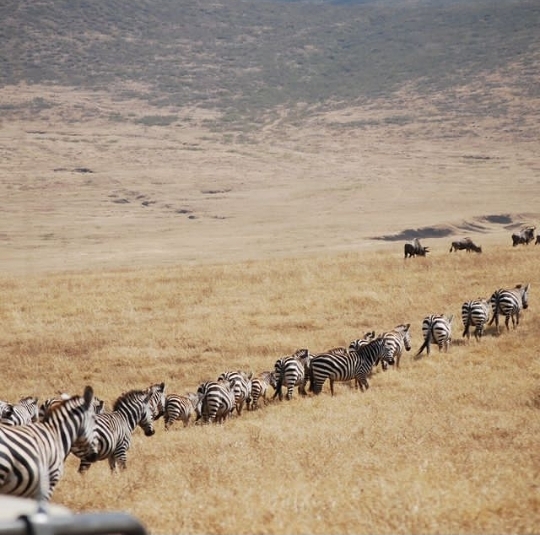
This movement includes large numbers of elephants, wildebeests, zebras, gazelles, and hartebeests, along with predators such as lions and leopards. Although smaller than the famous Great Wildebeest Migration, it creates outstanding wildlife viewing opportunities.
The thin vegetation and dry landscape offer excellent visibility, making Tarangire one of the most rewarding safari parks in northern Tanzania.
Dinner and overnight at Karatu
A 7-day guided safari covering Tarangire National Park, Ndutu, central Serengeti, Ngorongoro Crater, and a cultural visit to the Hadzabe and Datoga tribes. Accommodation is 4–5 star lodges, with lunch boxes or hot lunches provided on game drive days.
A 7-day guided safari covering Tarangire National Park, Ndutu, central Serengeti, Ngorongoro Crater, and a cultural visit to the Hadzabe and Datoga tribes. Accommodation is 4–5 star lodges, with lunch boxes or hot lunches provided on game drive days.
June–October (dry season) is best for Tarangire, when wildlife crowds around the river. December–March is the calving season in Ndutu and the southern Serengeti, when the wildebeest migration is at its most dramatic.
Elephants, wildebeest, zebras, hartebeests, gazelles, lions, leopards, cheetahs, hyenas, hippos, rhinos, flamingos, and diverse birdlife. The package is designed around the Big Five.
A spectacular event from December to March when up to 8,000 wildebeest calves are born daily on the southern Serengeti plains, drawing intense predator activity from lions, cheetahs, hyenas, and leopards.